Sunday, December 03, 2017

ACTU – Half-cocked PACER-Plus Agreement fails working people

30 November 2017

The PACER-Plus free trade agreement has been tabled in the senate today, despite the fact that Fiji and Papua New Guinea are opting out of the agreement – meaning it will not cover 80% of the population and GDP of Pacific Islands nations.

The agreement, which still includes Australia, New Zealand and other Pacific Island nations, opens developing nations up to potentially disastrous consequences. The Pacific Network on Globalisation (PANG) and the Australian Fair Trade and Investment Network (AFTINET) have both raised these concerns publically.

The proposed agreement would have serious negative impacts for Pacific Island Nations, including but not limited to:

Reduced government resources to alleviate poverty - Reduced tariff revenue, a significant part of government revenue in many Pacific island countries, could mean reduced government services for poverty alleviation in some of the poorest countries in the world, five of which are classified as least developed countries.

Negative Health impacts - Non-Communicable diseases are a major problem in the region and commitments under PACER-Plus will exacerbate them through an increase in cheap, unhealthy foods as well as threats to healthy, culturally appropriate food production. This is coupled with the possible reduced government health expenditure and the brain drain of health professionals out of the Pacific;

Gendered impacts - The majority of Pacific Island women are employed in infant industries, public services like nursing, and subsistence farming. Women will experience the negative impacts of PACER-Plus the most, including loss of formal and informal employment;

Reduced government rights to regulate for balanced development - The ability to regulate allows governments to shape the economy in the interests of development, environmental/cultural protection and human rights. The “safeguards” for the right to regulate in current text of PACER-Plus are inadequate because they do not apply if they are not consistent with other terms of the agreement

Quotes attributable to ACTU President Ged Kearney:

  • “We have serious concerns about the impact of the agreement on Pacific Island nations, including its impact on local industries and local cultures.”
  • “The decision by Fiji and PNG to opt out of the deal means it will only cover 20% of the Pacific Island Nations’ population and GDP, a huge embarrassment for the Turnbull Government.”
  • “This is another in a long list of trade agreements which the Turnbull Government have rushed through which give a lot of power to employers. This agreement will have serious impacts for local industries in Pacific Island Nations.”
  • “This agreement will be devastating for Pacific Island Nations. The Turnbull Government is shafting millions of people to placate the business lobby.”


Queensland Election – Labor Still Ahead 2 December count


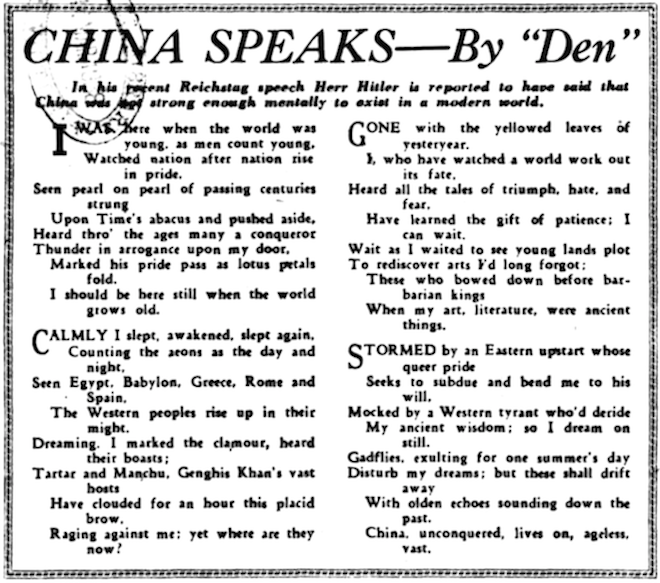
Nanjing Massacre – Japanese non-apology mind-boggling says WWII Veteran

Japanese non-apology still mind-boggling, says WWII US veteran

With China's national day of mourning for the Rape of Nanking (Nanjing Massacre) just two weeks away, John Yee, a Flying Tigers veteran, remembers when they posted pictures of mutilated and decapitated Chinese babies on giant placards in downtown Kunming. 

It was 1937 and a few days before Christmas. Yee was 17 years old. He was in southwest China's biggest city of Kunming at the time, handpicked as one of 30 translators to work with the Flying Tigers there.

Even in black and white, the pictures, just sent from Nanking - of mangled, bloody corpses, young and old - were so graphic and disturbing they cast a pall over the large, western Chinese city.

"People were stunned, people were quiet, and they went into a deep mourning, as though the end was near," said Yee, who was raised by English missionaries in Southwest China. 

Some 2,160 kilometers northeast of Kunming, George Fitch, a Presbyterian minister, was documenting the carnage that claimed 300,000 Chinese lives over the next few weeks.

"It is a story of such crime and horror as to be almost unbelievable," Fitch published in the Manchester Guardian in 1937. 

"The story of the depredations of a horde of degraded criminals of incredible bestiality, who have been and now are, working their will, unrestrained, on a peaceful, kindly, law-abiding people," Fitch wrote from Nanking on Dec. 24, 1937, about the Japanese invaders. 

"It was the greatest single horror of World War II," Yee said of the Japanese campaign of mass genocide - to kill every Chinese person in the city.

"But what makes it even worse is the failure of the Japanese to ever own up to it," Yee said. 

The Japanese not only committed the greatest atrocity of the 20th century, but as each day passes, are exposing themselves as the most arrogant people of the 21st century, Yee contends. 

In an exclusive interview Thursday with Xinhua on his 97th birthday, the retired Denver history professor said that Japan's decades-long denial and lack of an official apology questions even the core of Japanese heritage.

"We're still holding our breath," Yee shook his head. "It's honestly a surprise that people with such intelligence could continue to behave to selfishly and stupidly as to not see the value of a simple apology," he said. 

A member of the legendary World War II Flying Tigers, Yee came to America in 1944 and later became the first teacher in America's West to create and teach classes in Chinese history.

The decorated WWII veteran noted that Germany has apologized for its unfathomable crimes murdering six million Jews in the Great War, but no such open humility or atonement has come from the north Pacific island nation. 

In 1941, Yee, 20, joined an elite group of American flyers sent to Southwest China where the Japanese, flying from Vietnam, were bombing defenseless Kunming each day and night, killing thousands of innocent people. 

Yee served under the command of Gen. Claire Lee Chennault, considered one of the top military strategists in US history.

As a translator in the control room each day with "Old Leather Face," Yee saw a small force of 100 antiquated American P-40 airplanes stop the relentless Japanese bombings for once and for all.

"Just after Pearl Harbor the Americans struck back - over the skies of Kunming," Yee remembered with a smile. "The Japanese were in for a surprise that day - we shot down 13 of their planes to only one loss for us." 

The Kunming newspaper said the Americans looked tigers flying in the sky, and the Flying Tiger legend was born. That day America had scored it first of many future victories against Imperial Japan.

"The people of my city had lived in constant terror," Yee remembered. "Every night the city was dark, and you could hear the moans, wailing and sobbing from family members or the wounded." 

Yee contends that the extent of Japanese atrocities throughout the Pacific in WWII have been overlooked in Western teaching due to the emphasis on historical Europe, taught in American schools early on. 

"They still don't teach much about Asian history - look at the ignorance about Nanking," Yee pointed out.

The Japanese Imperial Army invaded China July 7, 1937 by "making up a story about a missing soldier," and started killing Chinese soldiers at the Marco Polo Bridge near today's Beijing, Yee said. 

Four months later, after encountering unexpected stiff resistance in Shanghai, a Japanese army of close to 1 million men descended on Nanking, China's capital city at that time, with a vengeance. The carnage began Dec. 13, 1937, Yee said. 

General Iwane Matsui "gave his troops a 2-week vacation," according to Yee, with orders to rape, pillage and leave none alive.

Japanese troops then engaged in a door-to-door, house to house brutal massacre of the families inside, raping young girls, forcing fathers to rape daughters and cutting live fetuses from women's bodies, according to HistoryPlace.com.

"The Japanese soldiers would throw babies into the air and bayonet them coming down," Yee said.

Second Lieutenants Toshiaki Mukai and Tsuyoshi Noda became Japanese celebrities for their contest to behead 100 Chinese citizens using a sword, Yee recalled. 

The two Imperial officers had their gangs grab screaming and defenseless elderly and young Chinese people by the hair and feet, and hack off their heads, that they then regarded as trophies, according to Yee. 

Neither Japanese lieutenant got justice at the 1946 Nanjing War Crimes Tribunal, but Matsui was one of the few Japanese generals found guilty and executed for war crimes, Yee noted.

The Rape of Nanking started by Japanese troops taking truckloads of unarmed Chinese soldiers - close to 100,000 men who had surrendered - to the outskirts of the city where they were used for bayonet practice, machine-gunned, and burned in massive grave pits. 

Then the Imperial soldiers turned to the city to commit crimes against women, children, and the elderly never before seen on Earth.

As the onslaught began, American missionary Fitch collaborated quickly with downtown businesses, and using Red Cross flags, successfully cordoned off an area the size of New York's Central Park. 

Called an "International Safety Zone," about 200,000 Chinese huddled in trembling, uncertain fear while screams of butchering filled their ears for days and nights. 

Fifty years later, in 1997, Yee met Iris Shun-Ru Chang, an American journalist who was in Denver just after writing the best-selling book, The Rape of Nanking.

"Every time I think of her I get sick to my stomach," Yee told Xinhua.

The nightmare of exposing the Japanese atrocities was too much for the Johns Hopkins-educated Chang, 36, who had birthed a baby boy just two years before.

"Her mind was sick...so filled with the horrors, the terrible horrors of the Japanese killings, that she got in her car," Yee said, bowing his head.

"She drove off somewhere, stuck a gun in her mouth, and shot herself," he said of Chang's suicide in 2004.

–––––––––––––––––––––––––––––––––––––––––––––––––––––––––––––––––––––––––––––––––

Australian poet C.J.Dennis wrote about the massacre in The Queenslander of 8 March 1938


Linda Burney: Turnbull's abrupt rejection of Indigenous voice spells end of bipartisanship

Sunday 3 December 2017

Linda Burney says the opportunity for bipartisan support on the proposed referendum to introduce an Indigenous voice to parliament is gone and the reform will have to be pursued “in a different way.”

Burney made the comments after Indigenous leader Noel Pearson wrote, in an excoriating account of prime minister Malcolm Turnbull’s decision not to support the proposal, that advocates for Aboriginal and Torres Strait Islander rights would have to turn back to the left side of politics push any potential changes through.

“When faced with the question of whether we predicate our struggle on the political right finding compassion or the political left finding its brains – I now know the answer,” Pearson wrote in the Monthly. “The left have an altruism the right will never muster. Every progress we make will have to be fought for, and every battle will be partisan. Bipartisanship is dead.”

Speaking on ABC News Breakfast on Sunday, Burney said she was appalled and disappointed by the Turnbull government’s rejection of the proposed Indigenous voice to parliament, which was a cornerstone recommendation of the Referendum Council report and the Uluru Statement from the Heart, which was endorsed by a gathering of more than 200 Aboriginal and Torres Strait Islander community leaders at Mutitjulu in May.

It was the first large-scale consultation of Indigenous peoples on what they wanted to see in the form of constitutional recognition.

Turnbull dismissed the idea in a press release in late October, a few hours after the Courier Mail published a leaked report of cabinet voting down the idea.

Burney said that the nature of the rejection meant that “the issue of bipartisanship on this particular point … is gone.”

“You cannot have a successful referendum unless there is bipartisanship and political leadership,” she said. “That doesn’t mean that there cannot be other ways found and explored to create a voice of Indigenous people to the parliament.”

Labor has pushed for a joint parliamentary committee to examine the Referendum Council’s proposals. The Indigenous affairs minister, Nigel Scullion, told Senate estimates that the matter would be put back to a joint select committee.

Most Australians support Indigenous voice to parliament plan that Turnbull rejected

But Burney, echoing the earlier words of Labor senator Pat Dodson, said it was “reprehensible” that a voice to parliament had been rejected before that process had even begun.

“It is a significant setback, but Aboriginal people are pretty used to significant setbacks,” she said. “I do believe there is goodwill and enough people within the parliament to take this agenda forward,” she said, adding that a committee would “explore ways in which we can still be true to the referendum council’s recommendations.”

“I have a very firm belief and I think enough experience in this space to believe that we can achieve the outcomes, perhaps in a different way.”

Pearson said he proposed an alternative path to recognition, which would put a referendum at the end of the process outlined by the Uluru Statement, after the proposed legislative changes and establishment of a Makaratta or treaty commission, to Scullion a week before the government publicly rejected the voice to parliament.

In a phone call with Scullion after the cabinet leak but before the joint press release, Pearson said: “He told me about the opposition within cabinet on the ‘inequality’ of Indigenous people having a voice to parliament compared with the rest of the country.

“It was staggering. I thought of the people out in the red dust of Mutitjulu and these privileged, powerful, white cabinet ministers complaining about inequality. Here were the most unequal people in the country, asking for a voice in their own affairs.”

 Pearson said Turnbull supported the Indigenous voice to parliament model when it was first discussed with him in 2015, at a meeting that was also attended by Shireen Morris, a senior adviser and constitutional reform research fellow at the Cape York Institute, and Turnbull’s chief of staff.

In October Turnbull said the proposal was neither “desirable or capable of winning acceptance at referendum” and “would inevitably become seen as a third chamber of parliament”, despite the proponents of the proposal clearly stating that it would have an advisory role only, with the parameters to be set and defined by parliament.

Polling conducted for Griffith University and the University of New South Wales before the cabinet decision was announced found that 60.7% of respondents broadly supported the idea of the voice to parliament.

CPSU – Border Force Boat Crews face Lead and Legionaires Contamination


DEC 01, 2017

The CPSU says the Australian Border Force’s Marine Unit put crews at unnecessary risk by putting operational requirements ahead of health and safety while dealing with lead and Legionella bacteria contamination on its fleet of Cape Class patrol boats.

Border Force has advised the CPSU that five of the Marine Unit’s eight Cape Class vessels have so far tested positive for lead contamination, either in the drinking water tanks or elsewhere. Legionella bacteria has been found on one boat.

The Cape Class boats were built by Western Australia based company Austal, with a phased introduction beginning in 2013.

CPSU Acting Deputy Secretary Brooke Muscat-Bentley said: “Lead and Legionnaires contamination to the Cape Class boats has obviously caused some significant stress and concern for our members working in the Marine Unit. The fact the lead has been found in the fresh water systems obviously adds to that worry, though blood tests so far have not detected dangerous levels of the heavy metal.”

“This situation has been made significantly worse because of how ABF management handled the issue in the early stages. They didn’t adequately communicate with staff or the union about the extent of contamination, and it appears their key priority was to keep these boats at sea rather than ensuring the health and safety of their crew. That’s an unacceptable approach, which is why we’ve been pushing for some weeks to ensure the well-being of staff comes first and DIBP are now putting in mitigation measures to deal with this issue.

“The CPSU only became aware of lead contamination in these boats when a member contacted us to say they had heard rumours of the lead issue. Border Force should have been far more proactive in notifying the union and crew members as soon as the first traces of lead were detected, and the lack of communication has undermined the confidence of staff in how the situation’s being handled.”

“The CPSU has escalated this matter to senior levels in Comcare and we are continuing to push DIBP to ensure that they comply with their obligations under the Work Health and Safety Act.  We are in daily contact with affected members and work health and safety representatives and we will continue to push hard on this issue until we are satisfied there is no risk to our members.”

“We’ve been able to ensure blood testing has been made available to all affected crew members, and Border Force did eventually agree to guarantee that boats will not deploy if unsafe levels of lead are detected in on-board drinking water.”

“Despite the progress that’s been made we still believe not enough is being done to establish the source of the lead contamination on the Cape Class boats. Flushing the drinking water tanks alone does not address the risk that lead continues to make its way into drinking water supply. Our members spend 28 days at a time on these boats, totally reliant on the on-board water, so it’s important that water remains safe throughout their time at sea.”